
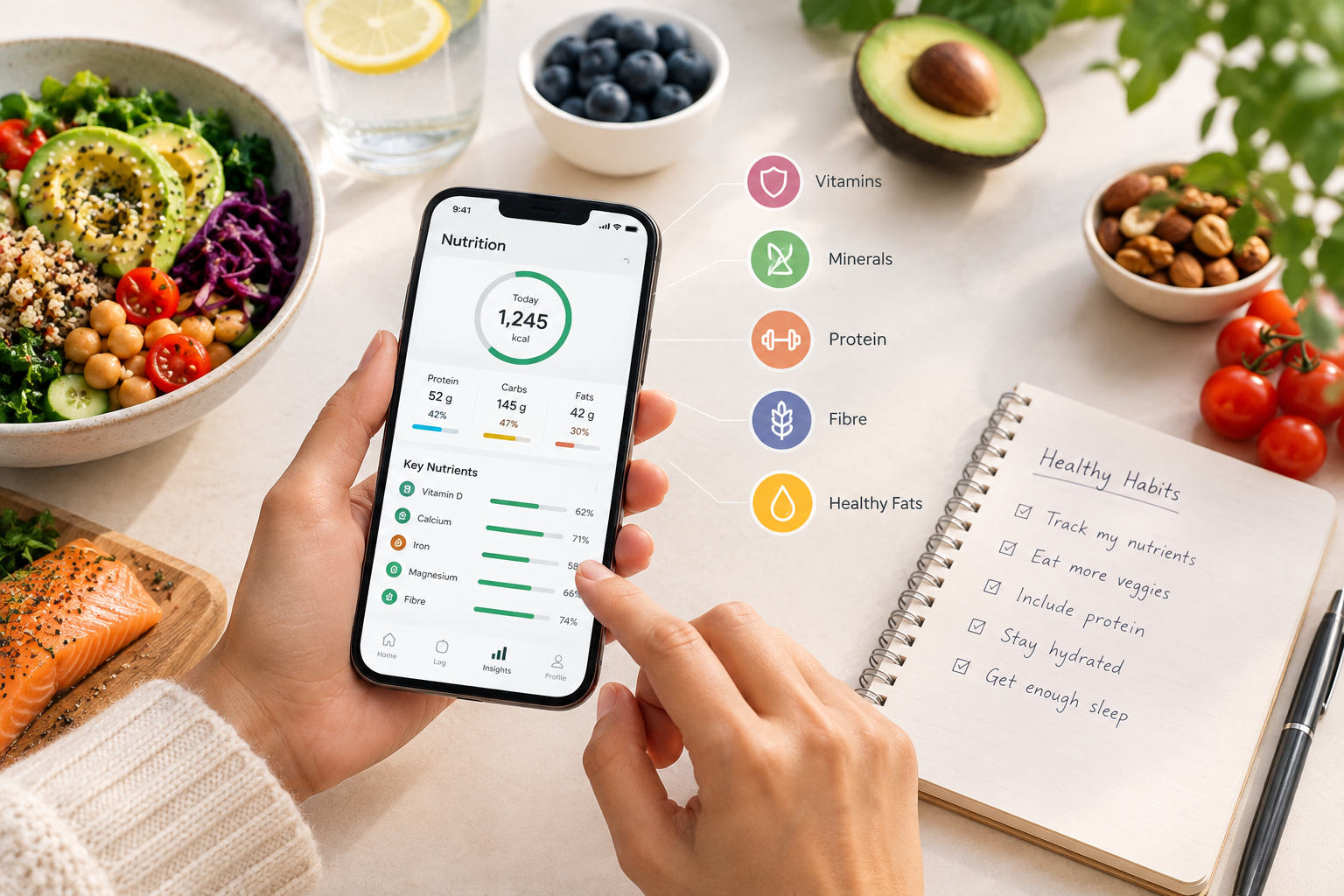
Eating enough food does not always mean you are getting all the nutrients your body needs. You can consume enough calories while still falling short on important vitamins, minerals, protein, fibre, and other essential nutrients.
This is why looking beyond calories can be valuable. Nutrient tracking helps you understand what your regular diet provides and whether you may have nutritional gaps that need attention.
But which nutrients should you monitor, and can tracking your diet help you recognise a potential deficiency?
In this guide, we’ll explore how to track your daily nutrient intake, identify potential gaps, and make more informed food choices.
Why Is Nutrient Tracking Important?
Calories tell you how much energy you consume, but they do not show the complete nutritional picture.
For example, two meals may contain a similar number of calories while providing very different amounts of protein, fibre, iron, calcium, or vitamins.
Tracking your nutrients can help you:
- Understand the nutritional value of your meals
- Monitor important vitamins and minerals
- Identify potential gaps in your diet
- Build more balanced meals
- Make more informed food choices
- Recognise patterns in your eating habits
The goal isn’t to obsess over every number. Instead, nutrient tracking gives you a clearer picture of the overall quality and variety of your diet.
Which Nutrients Should You Track?
The nutrients you need depend on factors such as your age, diet, activity level, and individual circumstances. However, several nutrients are particularly useful to keep an eye on.
1. Protein
Protein supports the maintenance and repair of body tissues and plays an important role in many normal bodily functions.
Sources include eggs, fish, poultry, dairy products, beans, lentils, tofu, nuts, and seeds.
2. Fibre
Fibre is found in foods such as fruits, vegetables, whole grains, beans, lentils, nuts, and seeds.
If your diet contains few plant-based foods, tracking your fibre intake can help you recognise an area that may need improvement.
3. Iron
Iron is found in foods including meat, seafood, beans, lentils, spinach, fortified cereals, nuts, and seeds.
Regularly including a variety of iron-rich foods can help support an adequate dietary intake.
4. Calcium
Calcium is commonly found in dairy products, fortified plant-based drinks, calcium-set tofu, some leafy greens, and certain fish.
Tracking your meals can help you see whether calcium-rich foods are regularly included in your diet.
5. Vitamin D
Vitamin D can be obtained from foods such as oily fish, egg yolks, and fortified products. Because relatively few foods naturally contain substantial amounts of vitamin D, dietary intake can be worth monitoring.
6. Vitamin B12
Vitamin B12 is naturally present mainly in meat, fish, eggs, and dairy products. Some foods are also fortified with B12.
People following vegetarian or vegan diets may need to pay particular attention to their B12 intake and discuss supplementation with a healthcare professional when appropriate.
7. Magnesium and Potassium
These minerals are found in foods such as vegetables, fruits, legumes, whole grains, nuts, and seeds.
A varied diet can help provide a broad range of essential vitamins and minerals.
How to Track Your Daily Nutrient Intake
You don’t have to manually calculate every nutrient in every meal. A nutrition tracking tool can make the process much simpler.
1. Record Your Meals
Start by recording the foods and drinks you consume throughout the day.
Include meals, snacks, and relevant ingredients such as sauces, oils, dressings, and toppings. Accurate portions can also make your tracking more useful.
2. Look Beyond Calories
Once your meals are recorded, pay attention to more than your calorie intake.
Look at nutrients such as protein, fibre, iron, calcium, vitamin D, and vitamin B12 to understand the nutritional composition of your diet.
3. Look for Patterns
One day’s meals do not necessarily reflect your overall nutrition. Instead, review your intake across several days or weeks. Ask yourself:
- Am I regularly eating vegetables and fruit?
- Am I getting enough protein?
- Do I regularly eat sources of iron and calcium?
- Is my diet varied enough?
- Are there nutrients I consistently consume in small amounts?
These patterns can reveal areas where your diet may be lacking.
4. Make Practical Changes
If you notice a nutrient is consistently low, look for simple ways to include more foods that provide it. For example, you could add more:
- Vegetables and leafy greens
- Beans and lentils
- Whole grains
- Nuts and seeds
- Eggs and dairy products
- Fish or other protein sources
- Fortified foods where appropriate
Rather than relying on one “superfood,” aim for variety across your meals.
Can Nutrient Tracking Help Identify a Deficiency?
Nutrient tracking can help you spot potential nutritional gaps, but it cannot diagnose a medical deficiency on its own.
If your food records consistently show that you consume very little of a particular nutrient, this may be a reason to review your diet more closely.
However, a deficiency is a medical issue. Symptoms such as tiredness, weakness, changes in skin or hair, or difficulty concentrating can have many different causes and should not automatically be attributed to a lack of a particular nutrient.
If you are concerned about a deficiency, a qualified healthcare professional can assess your symptoms and determine whether further evaluation or testing is appropriate.
Nutritional Gap vs Nutrient Deficiency
- A nutritional gap means your diet may not be providing enough of a particular nutrient on a regular basis.
- A nutrient deficiency occurs when the body does not have enough of that nutrient and may require professional assessment.
This distinction is important. A food-tracking app can help you understand what you eat, but it should not replace medical advice or diagnostic testing.
How TraceVita Helps You Understand Your Nutrition
Keeping track of meals and their nutritional content manually can become time-consuming.
TraceVita is designed to make understanding your food and nutrition easier by helping you track your meals and gain insights into your dietary intake.
Instead of focusing solely on calories, you can use nutrition information to get a broader view of what you’re consuming and where your diet may have potential gaps.
This can make it easier to ask better questions about your eating habits, such as:
- Am I getting enough protein?
- Am I regularly eating foods that provide important vitamins and minerals?
- Are there areas of my diet that I should improve?
By making nutrition information easier to understand, a tracking tool can support more informed everyday food choices.
How to Improve Your Overall Nutrient Intake
Once you understand your eating patterns, focus on making sustainable changes rather than trying to completely change your diet overnight.
- Eat a Variety of Foods: Different foods provide different nutrients. Include a mixture of vegetables, fruits, whole grains, legumes, protein sources, nuts, and seeds where appropriate.
- Include Protein-Rich Foods: Try to include a protein source in your main meals. Options can include eggs, fish, poultry, dairy, beans, lentils, tofu, nuts, and seeds.
- Choose Nutrient-Dense Foods: Prioritise foods that provide useful amounts of vitamins, minerals, protein, fibre, and other nutrients rather than focusing only on calorie content.
- Track Consistently: Tracking your meals for a period of time can reveal patterns that you may not notice from individual meals. You can then use those insights to make realistic dietary adjustments.
- Seek Professional Advice When Needed: If you have persistent symptoms or believe you may have a nutrient deficiency, speak with a qualified healthcare professional rather than trying to diagnose the problem yourself.
Final Thoughts
Good nutrition isn’t just about eating enough food or staying within a calorie target. It’s also about getting a wide range of essential nutrients from your diet.
Tracking your daily nutrient intake can help you understand what you’re eating, recognise potential nutritional gaps, and make more informed food choices.
Tools such as TraceVita can make this process easier by helping you track your meals and understand your nutritional intake in one place.
However, remember that identifying a dietary gap is not the same as diagnosing a nutrient deficiency. If you have concerns about your health or nutrient levels, consult a qualified healthcare professional for personalised advice.