
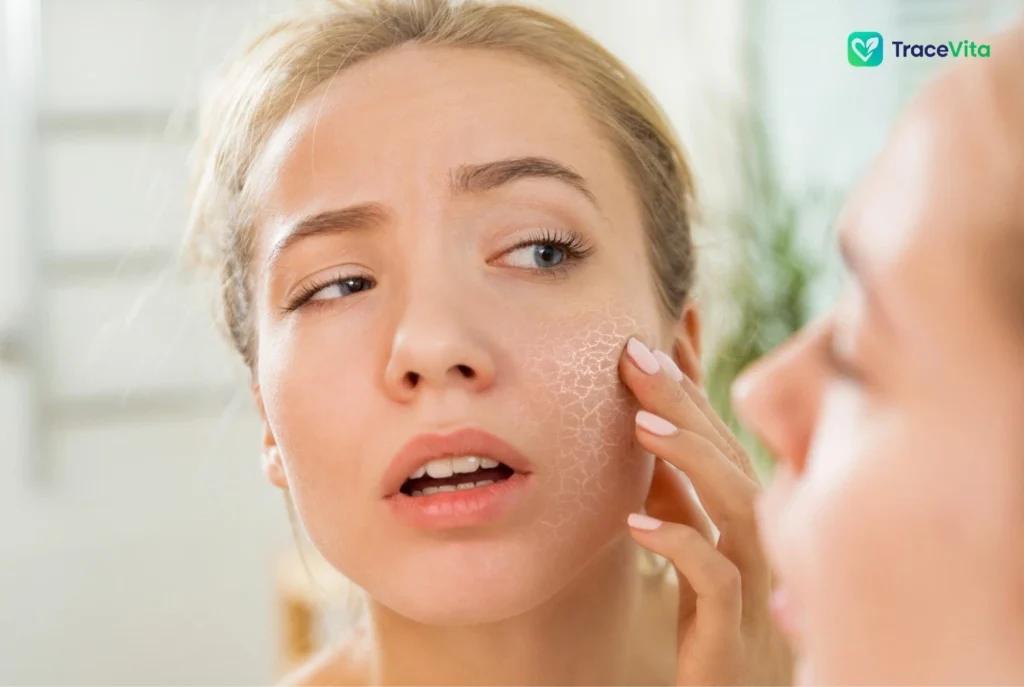
Dry skin, clinically termed xerosis cutis (from the Greek xero meaning “dry” and cutis meaning “skin”), is a condition in which the skin lacks sufficient moisture in its outermost layer — the stratum corneum. This outermost layer functions as the body’s primary barrier, protecting against environmental aggressors, allergens, and water loss.
Under healthy conditions, the stratum corneum contains natural moisturizing factors (NMFs) — a mixture of amino acids, lactic acid, urea, and other compounds — that keep the skin soft, supple, and elastic. When this balance is disrupted, water evaporates from the skin’s surface faster than it can be replenished, a process called transepidermal water loss (TEWL).
Key Definition
Transepidermal Water Loss (TEWL) is the primary mechanism behind dry skin. When the skin barrier is compromised — due to genetics, environment, or lifestyle — water escapes the epidermis rapidly, leaving skin tight, rough, and prone to cracking. Effective dry skin treatment always targets reducing TEWL.
How Common Is Dry Skin?
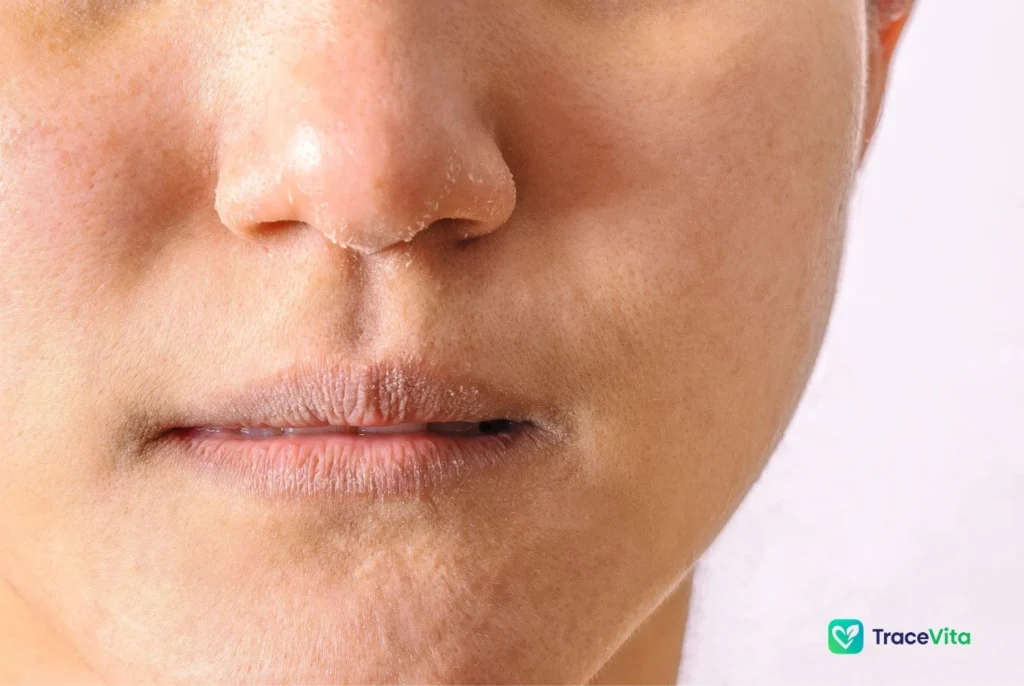
Dry skin is one of the most prevalent dermatological concerns globally:
- Affects approximately 50–60% of adults over 40, rising sharply with age
- In the UK, it is among the top 3 reasons for GP (general practitioner) dermatology referrals
- In Canada, cold winters dramatically increase winter dry skin complaints by up to 40% seasonally
- In the USA, over 81 million people report clinically significant dry skin annually
- More prevalent in women, older adults, and people in low-humidity environments
Root Causes of Dry Skin — A Complete Breakdown
Dry skin is never caused by a single factor. It is almost always the result of multiple overlapping causes — environmental, behavioral, and biological. Understanding your specific triggers is the first step toward effective treatment.
Environmental & Seasonal Causes
Cold Weather & Low Humidity
Winter is the #1 dry skin trigger. Cold air holds less moisture, and indoor heating strips humidity further — a double assault on your skin barrier.
UV Radiation
Prolonged sun exposure degrades collagen and lipids in the skin, weakening the barrier and accelerating moisture loss. UV rays are a year-round dry skin driver.
Wind & Air Conditioning
Wind physically strips moisture from the skin’s surface. Air conditioning in offices and cars reduces ambient humidity to as low as 20% — far below the 45–55% ideal range.
Hard Water
High mineral content water (common across much of the UK, Midwest USA, and parts of Canada) leaves calcium and magnesium deposits that impair the skin barrier and promote dryness.
Lifestyle & Behavioral Causes
- Hot showers and baths: Hot water dissolves the skin’s natural oils more aggressively than lukewarm water, rapidly depleting the lipid layer of the stratum corneum.
- Harsh soaps and detergents: Many conventional soaps and body washes contain sulfates and alkaline pH-raising ingredients that disrupt the skin’s naturally acidic mantle (pH 4.5–5.5).
- Over-washing: Washing hands, face, or body excessively — particularly with antibacterial soaps — removes protective oils before they can regenerate.
- Dehydration: Insufficient water intake means the body prioritizes hydrating vital organs, leaving skin with minimal moisture reserves.
- Poor diet: Deficiency in Omega-3 fatty acids, Vitamins A, C, D, and E, and zinc all impair the skin barrier and contribute to dryness.
- Smoking and alcohol: Both constrict blood vessels, reduce collagen synthesis, and impair skin hydration significantly.
- Skipping moisturizer: Failing to replenish lipids after bathing dramatically increases TEWL.
Medical Conditions Associated with Dry Skin
When dry skin is persistent, severe, or does not respond to standard skincare, an underlying medical condition may be the cause:
| Condition | How It Causes Dry Skin | Severity |
|---|---|---|
| Eczema (Atopic Dermatitis) | Genetic defect in the filaggrin protein, resulting in a severely compromised skin barrier with chronic dryness, inflammation, and itch | Severe |
| Psoriasis | Accelerated skin cell turnover leaves scaly, dry plaques on the skin surface | Severe |
| Hypothyroidism | Low thyroid hormones reduce sweat and sebum production, leading to widespread dry, pale skin | Moderate |
| Diabetes | High blood sugar impairs circulation and nerve function, reducing the skin’s ability to retain moisture | Moderate |
| Kidney Disease | Reduced kidney function leads to buildup of toxins that dry out the skin and cause uremic pruritus | Severe |
| Ichthyosis | Genetic condition that impairs the skin’s ability to shed dead cells normally, causing fish-scale dryness | Severe |
| Contact Dermatitis | Allergic or irritant reaction disrupts the barrier, causing localized dryness, redness, and cracking | Mild–Moderate |
| Malnutrition | Deficiency in essential fatty acids, vitamins, and minerals undermines the skin barrier | Moderate |
Signs & Symptoms of Dry Skin — Recognizing It Early
Dry skin presents along a wide spectrum of severity. Recognizing the early signs allows you to intervene before minor dryness escalates into painful cracking, infection risk, or chronic eczema flares.
Common Signs of Dry Skin
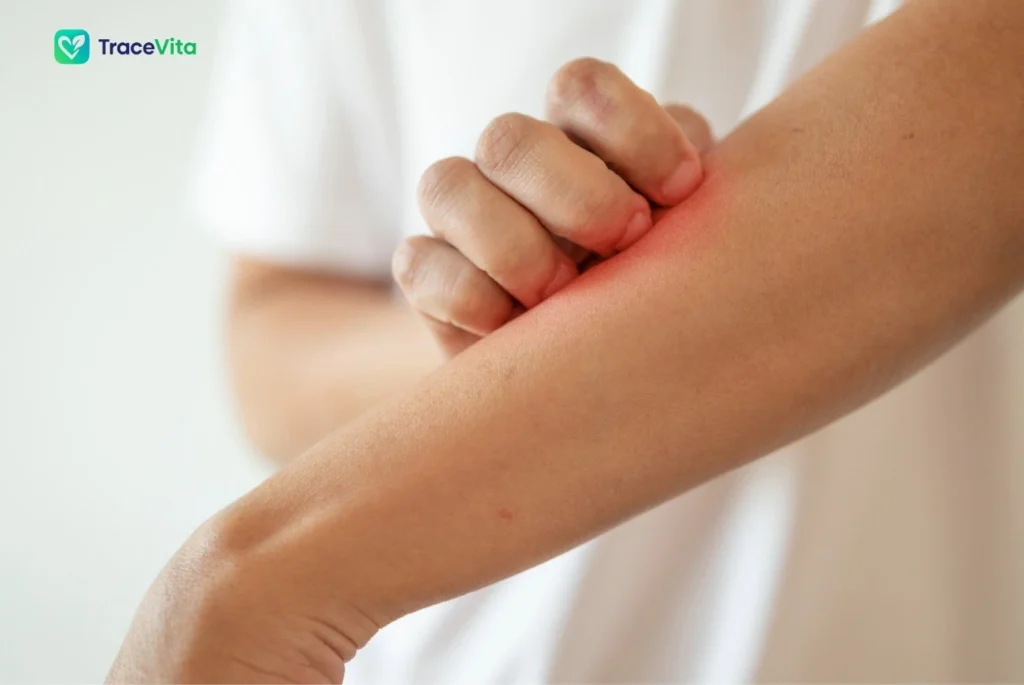
- Tightness — A feeling of skin “pulling” after washing, especially on the face
- Roughness or sandpaper texture — Particularly on the arms, legs, and elbows
- Flaking and peeling — Dead skin cells visibly lifting from the surface
- Itching (pruritus) — Often worsening at night or after bathing
- Redness and inflammation — Localized or widespread, often with a raw appearance
- Fine lines and cracks — Especially in areas of repeated movement like knuckles and lips
- Deep cracks (fissures) — Particularly on the heels and hands, which may bleed
- Dull, ashy appearance — Skin loses its natural sheen and looks grey-toned
- Skin feels “paper-like” — With reduced elasticity when gently pinched
When Dry Skin Becomes Serious
If dry skin is accompanied by intense itch, widespread redness, weeping sores, sleep disruption, or does not improve after 2 weeks of consistent moisturizing, consult a dermatologist. These signs may indicate a treatable skin condition like eczema or psoriasis.
Dry Skin vs. Dehydrated Skin — A Critical Distinction
One of the most common misconceptions in skincare is confusing dry skin with dehydrated skin. They look similar, feel similar — but they require different solutions.
| Factor | Dry Skin (Xerosis) | Dehydrated Skin |
|---|---|---|
| What it is | A skin type — a permanent or chronic lack of oil/lipid production | A skin condition — temporary lack of water in the skin |
| Cause | Genetics, aging, hormones, medical conditions | Diet, environment, caffeine, not drinking enough water |
| Appearance | Flaky, rough, peeling, red | Dull, tight, fine lines, dark circles |
| Can it affect oily skin? | No — dry skin lacks oils | Yes — even oily skin can be dehydrated |
| Treatment focus | Restore lipids: ceramides, occlusives, emollients | Restore water: hyaluronic acid, glycerin, increased water intake |
Pro Tip: You can have both dry and dehydrated skin simultaneously. The best approach? Layer a hydrating serum (hyaluronic acid for water) under a rich moisturizer (ceramides/shea for oil). This addresses both concerns in one routine.
Best Dry Skin Treatments in 2026 — Evidence-Based Approaches
Dry skin treatment in 2026 has advanced significantly beyond simple creams. Today, treatment is layered across skincare science, biome research, and personalized AI recommendations. Here is what the evidence supports.
1. The “Soak and Seal” Method — The Gold Standard
Endorsed by the American Academy of Dermatology (AAD) and UK’s British Association of Dermatologists, the Soak and Seal technique remains the single most effective immediate treatment for dry skin:
- Soak the skin in lukewarm water for 5–10 minutes (bath, shower, or soaking hands)
- Gently pat the skin almost dry — leaving it slightly damp
- Immediately (within 3 minutes) apply a thick moisturizer to lock in the absorbed water
- Repeat morning and evening for best results
2. Prescription Treatments for Severe Dry Skin
When over-the-counter products are insufficient, dermatologists in the USA, UK, and Canada may prescribe:
- Topical corticosteroids (e.g., hydrocortisone 1–2.5%) — For inflamed, itchy dry skin; short-term use only
- Crisaborole (Eucrisa) — A PDE4 inhibitor approved for mild-to-moderate atopic dermatitis with dry skin
- Dupilumab (Dupixent) — Biologic injection for severe eczema-related dry skin, approved in US, UK, and Canada
- Urea cream 10–40% — Prescription-strength keratolytic and humectant for severely rough, thick skin
- Lactic acid 12% (AmLactin, Lac-Hydrin) — Exfoliates and hydrates simultaneously
3. In-Office Dermatological Procedures
- Medical-grade LED therapy — Red and near-infrared light stimulates collagen and improves barrier function
- Hydrafacial treatments — Deep cleansing combined with intensive serum infusion for persistent facial dry skin
- Platelet-Rich Plasma (PRP) — Increasingly used in 2026 to regenerate the skin barrier in chronic cases
- Microbiome restoration treatments — New in 2026, these infuse beneficial bacteria directly into the skin to restore the microbiome and strengthen barrier function
4. Home Remedies & Natural Treatments That Actually Work
Not all home remedies are equal. Here are those with scientific backing:
- Colloidal oatmeal baths — The FDA recognizes colloidal oatmeal as a skin protectant; soothes itch and restores the barrier
- Coconut oil — Contains lauric acid and fatty acids; clinically shown to improve skin hydration and barrier function in mild dry skin and eczema
- Sunflower seed oil — Rich in linoleic acid; strengthens the skin barrier without the comedogenic risk of heavier oils
- Aloe vera gel — Naturally anti-inflammatory; soothes and provides short-term moisture relief
- Honey — Powerful humectant and antimicrobial; useful as a gentle hydrating mask
- Petroleum jelly (Vaseline) — The original occlusive; creates a near-impermeable barrier, dramatically reducing TEWL. Ideal for very dry heels, hands, and lips
Avoid These Common Dry Skin Mistakes
Do not use olive oil on the face (it contains oleic acid which can worsen barrier damage), avoid fragrance-heavy moisturizers (a top allergen that worsens dry skin), and never use exfoliants like scrubs on already cracked or inflamed dry skin.
The Best Skincare Ingredients for Dry Skin in 2026
Understanding ingredients is the foundation of intelligent skincare. The most effective dry skin formulas in 2026 combine three classes of moisturizing agents: humectants (attract water), emollients (soften and smooth), and occlusives (seal moisture in).
Humectants — Draw Moisture Into the Skin
Hyaluronic Acid: Holds up to 1,000× its weight in water; the #1 hydrating serum ingredient
Glycerin: Budget-friendly, effective humectant in almost every moisturizer; excellent tolerance
Urea: Dual-action: draws water AND gently exfoliates dead skin. Ideal for thick, rough areas
Aloe Vera: Natural humectant with anti-inflammatory benefits; gentle for sensitive dry skin
Panthenol (B5): Deeply penetrates and retains moisture; also promotes skin repair
Sodium PCA: A component of skin’s own NMF (natural moisturizing factor); biomimetic hydration
Emollients — Fill Gaps in the Skin Barrier
Ceramides: The #1 ingredient for restoring the skin barrier. CeraVe’s signature formula delivers ceramides 1, 3, and 6-II
Shea Butter: Rich in oleic and stearic fatty acids; intensely nourishing for very dry skin
Squalane: Lightweight, non-comedogenic plant-derived oil that mimics skin’s natural sebum
Niacinamide: Strengthens the barrier, reduces redness, and increases ceramide production in the skin
Jojoba Oil: Technically a liquid wax that closely mimics sebum; excellent emollient for face and body
Linoleic Acid (Omega-6): An essential fatty acid that is often deficient in dry skin; rebuilds barrier lipids
Occlusives — Seal and Protect
Petrolatum: The most effective occlusive known. Reduces TEWL by up to 99% when applied. Found in Vaseline, Aquaphor
Dimethicone: Silicone-based occlusive that creates a breathable, non-greasy protective film
Beeswax: Natural occlusive used in lip balms, hand balms, and overnight treatments
Lanolin: Derived from sheep’s wool; extremely effective for very dry, cracked skin — avoid if lanolin-sensitive
Complete Daily Skincare Routine for Dry Skin — Morning & Night
Consistency is everything in dry skin management. A targeted twice-daily routine — tailored specifically for dry skin — can transform skin health in as little as 2–4 weeks.
Morning Routine
1. Gentle Cream or Micellar Cleanser
Skip foaming cleansers in the morning — they strip oils your skin rebuilt overnight. Use a cream cleanser (Cetaphil Gentle, CeraVe Hydrating, La Roche-Posay Toleriane) or simply rinse with cool water.
2. Hydrating Toner or Essence (Optional)
Apply a hydrating toner with glycerin or hyaluronic acid to damp skin to prep and plump before serum application.
3. Hyaluronic Acid Serum
Apply 2–3 drops to slightly damp skin. Hyaluronic acid draws atmospheric moisture into the skin. Key: always apply to damp skin, never dry, to avoid it pulling moisture out instead.
4. Rich Ceramide Moisturizer
Apply while skin is still slightly damp from serum. Look for ceramides, glycerin, and niacinamide. Best options in 2026: CeraVe Moisturizing Cream, Vanicream Moisturizing Cream, La Roche-Posay Cicaplast Baume B5.
5. SPF 30+ Broad-Spectrum Sunscreen
UV radiation is one of the leading causes of accelerated barrier breakdown. Choose a mineral or hybrid SPF with added moisturizing properties (EltaMD UV Clear SPF 46, Altruist Sunscreen SPF50). Never skip this step — even in winter in the UK or Canada.
Evening Routine
1. Oil-Based or Balm Cleanser
At night, a gentle oil cleanser melts away SPF and pollution without stripping skin. Follow with a hydrating second cleanse if wearing makeup.
2. Actives: Retinol or Peptides (2–3x per week)
For anti-aging dry skin, low-concentration retinol (0.025–0.1%) stimulates collagen and speeds barrier repair. Always sandwich retinol between moisturizer layers to prevent irritation. Peptides (Matrixyl, Argireline) are a gentler alternative that support barrier rebuilding.
3. Rich Night Cream or Sleeping Mask
Night is the skin’s repair window. Use a significantly richer cream than daytime — look for shea butter, ceramides, and cholesterol. Laneige Water Sleeping Mask and First Aid Beauty Ultra Repair Cream are consistently top-rated.
4. Occlusive Seal (Slugging) — 2x per week
“Slugging” — applying a thin layer of petroleum jelly (Vaseline) or Aquaphor as the final step — has become one of the most popular and effective dry skin hacks of the 2020s. It creates a near-total moisture seal overnight. Ideal for very dry skin or during winter months in the UK, Canada, and northern USA.
Routine Tip — Body Skin Too!
Don’t neglect your body. Apply a rich body lotion or butter (Aveeno Daily Moisture, Gold Bond Healing, Palmer’s Cocoa Butter) within 3 minutes of showering. For extra-dry legs and heels, apply a urea 10% cream nightly and wear cotton socks to bed.
Diet & Nutrition for Hydrated Skin — Eating Your Way to Moisture
Healthy skin starts from within. Topical skincare can only do so much — the raw materials your skin needs to build and maintain its barrier must come from the foods you eat.
Best Foods for Dry Skin
- Fatty fish (salmon, mackerel, sardines): Rich in Omega-3 fatty acids (EPA and DHA) that reduce inflammation and strengthen the skin’s lipid barrier
- Avocados: High in Vitamins E and C, plus healthy monounsaturated fats that support skin elasticity and moisture retention
- Walnuts: One of the best plant sources of Omega-3 and Omega-6 fatty acids, plus zinc for barrier repair
- Flaxseeds & chia seeds: Plant-based Omega-3 (ALA) with high fiber for gut-skin axis health
- Sweet potatoes: Packed with beta-carotene (pro-Vitamin A), which acts as a natural skin protectant against UV damage
- Bell peppers: One of the highest Vitamin C foods available; essential for collagen synthesis and antioxidant skin protection
- Sunflower and pumpkin seeds: Excellent sources of Vitamin E and zinc — two nutrients critically important for skin barrier integrity
- Dark leafy greens (spinach, kale): Provide Vitamins A, C, K, plus iron for healthy circulation to skin cells
- Water: Drink a minimum of 8 glasses (64 oz / 2 liters) daily. Increase to 10–12 glasses in hot weather, during exercise, or in dry climates
- Green tea: Rich in EGCG antioxidants that reduce skin inflammation and support hydration
Foods to Limit for Dry Skin
- Alcohol — Dehydrating, inflammatory, depletes Vitamin A and zinc
- Caffeine in excess — Acts as a diuretic, increasing water loss
- Refined sugar & processed foods — Glycation breaks down collagen and impairs barrier function
- Trans fats — Block the body’s use of anti-inflammatory Omega-3s
- High-sodium foods — Promote systemic dehydration and skin dullness
If you want, you can take free guidance from Tracevita to overcome your dry skin problem. Apps are also available on Playstore and Appstore.
Dry Skin on the Body — Special Care Areas
Different body zones require tailored approaches due to varying skin thickness, oil gland density, and exposure levels.
Dry Skin on Hands
The hands are washed most frequently and exposed to the most harsh conditions. Use a rich hand cream with urea 5–10% after every wash. At night, apply a thick barrier balm (Neutrogena Norwegian Formula, O’Keeffe’s Working Hands) and wear cotton gloves overnight for intensive repair.
Dry Skin on Feet & Heels
Heel fissures can become seriously painful and prone to infection. Weekly pumice stone exfoliation followed by a urea 25–40% cream applied under socks overnight is the most effective protocol. For cracked heels specifically, Flexitol Heel Balm (available in USA, UK, and Canada) is one of the highest-rated products in clinical surveys.
Dry Skin on the Face
Facial dry skin requires the gentlest, most fragrance-free approach. Avoid foaming cleansers, alcohol-based toners, and high-concentration exfoliants. Focus on ceramide-rich moisturizers, hyaluronic acid serums, and barrier-repairing ingredients. For dry skin around the nose and mouth (common in winter), apply a small amount of petroleum jelly as a protective layer before going outside.
Dry Skin on Legs
Legs have very few oil glands and are commonly neglected. Apply body lotion or oil (Neutrogena Body Oil, Bio-Oil) immediately after showering while skin is still damp. For severe leg dryness with visible scales, an Omega-rich body cream with urea or lactic acid applied at night under cotton pajamas delivers the best results.
Dry Skin Around the Eyes
The periorbital area has the thinnest skin on the face and no oil glands. Use a dedicated eye cream with ceramides and peptides (no retinol here unless it’s a very low-concentration eye formulation). Pat — never rub — product around the eye area.
When to See a Doctor for Dry Skin
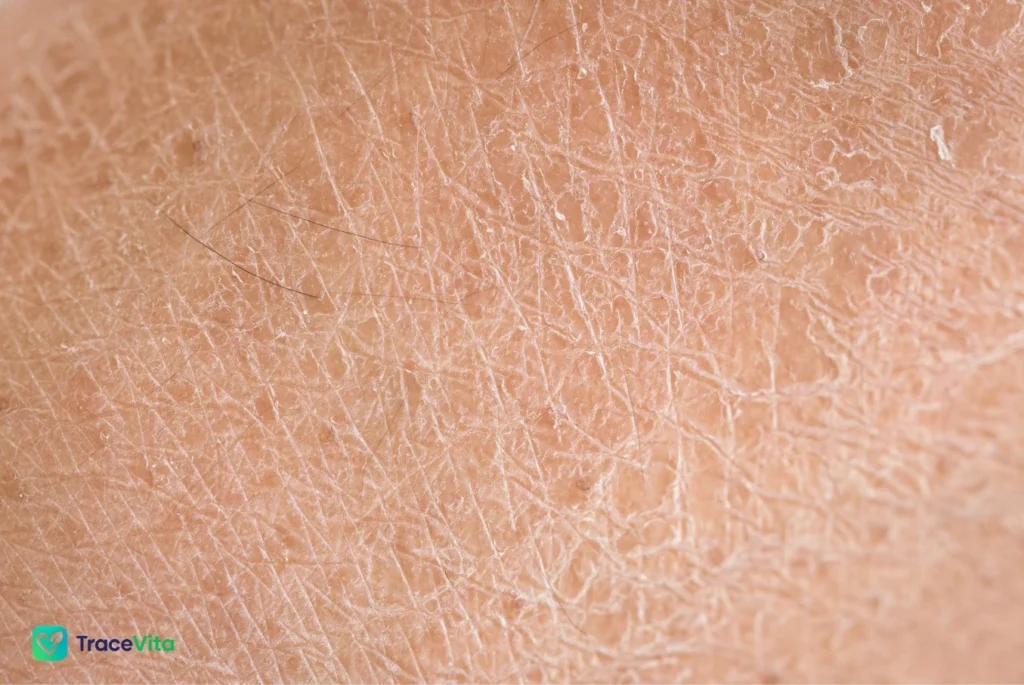
While most cases of dry skin respond well to lifestyle adjustments and over-the-counter moisturizers, there are clear warning signs that warrant a professional consultation with a dermatologist or GP.
See a Dermatologist If:
- Your dry skin does not improve after 2 weeks of consistent moisturizing with quality products
- Dry skin is accompanied by intense itching that disrupts sleep
- Skin is cracked, bleeding, or showing signs of infection (yellow crusting, spreading redness, warmth)
- You have large areas of scaly, thickened skin that seems to be spreading
- Dry skin is present from birth or early childhood (may indicate ichthyosis or atopic dermatitis)
- Dry skin is accompanied by unexplained fatigue, weight changes, excessive thirst, or other systemic symptoms (screen for thyroid or diabetes)
- No over-the-counter product seems to provide any relief
Healthcare Access by Region
USA: Use the American Academy of Dermatology (AAD) Find a Dermatologist tool at aad.org. UK: Book via NHS GP referral or use online dermatology services like Dermatica, Skin + Me. Canada: Referral through your family physician or use provincial virtual care services. Teledermatology is widely available across all three regions in 2026.
Conclusion: Overcoming Dry Skin — Your Path to Lasting Hydration
Dry skin is one of the most universal human experiences — but it is also one of the most manageable. Whether you are dealing with a minor seasonal flare, chronic lifelong dryness, or a condition like eczema or psoriasis, the answers are clear: protect the barrier, hydrate consistently, nourish from within, and seek expert help when needed.
In 2026, we have more tools than ever before. From ceramide-packed moisturizers and AI-personalized skincare formulas to wearable hydration sensors and teledermatology services, the science of skin hydration is more precise, more accessible, and more effective than any previous era. The key is taking the first step: building a simple, consistent routine and sticking with it.
Your skin is your largest organ and your most visible one. It deserves the same consistent, evidence-based care you give to any other aspect of your health. Start with the basics — gentle cleansing, rich moisturizing, SPF protection, and hydration — and build from there. Relief is not just possible. For most people, it is inevitable with the right approach.
Key Takeaways — Dry Skin 2026
- ✔ Dry skin is caused by TEWL — address the barrier first with ceramides and occlusives.
- ✔ Apply moisturizer within 3 minutes of bathing for maximum absorption.
- ✔ The trio of humectants + emollients + occlusives is the gold standard formula.
- ✔ Diet, hydration, and sleep are as important as topical skincare.
- ✔ AI skincare tools in 2026 offer unprecedented personalization for dry skin treatment.
- ✔ Persistent, severe, or unexplained dry skin always warrants a dermatologist visit.
Frequently Asked Questions About Dry Skin
What is the main cause of dry skin?
The main causes of dry skin include cold and low-humidity environments, excessive hot showers, harsh soaps, aging, and underlying medical conditions such as eczema, psoriasis, hypothyroidism, or diabetes. The skin loses its natural moisture barrier when these factors strip away essential oils and lipids from the stratum corneum, leading to increased Transepidermal Water Loss (TEWL).
How do I get rid of dry skin fast?
To get rid of dry skin fast: (1) Apply a thick, fragrance-free ceramide moisturizer within 3 minutes of bathing, (2) use only lukewarm water when showering, (3) switch to a gentle hydrating cleanser, (4) drink at least 8 glasses of water daily, (5) run a humidifier indoors, and (6) choose skincare products containing hyaluronic acid, ceramides, glycerin, or shea butter. Consistent morning and evening moisturizing is the fastest path to relief.
What is the best moisturizer for dry skin in 2026?
The best moisturizers for dry skin in 2026 contain a combination of humectants (hyaluronic acid, glycerin), emollients (ceramides, shea butter, squalane), and occlusives (petrolatum, dimethicone). Top dermatologist-recommended products include CeraVe Moisturizing Cream, Vanicream Moisturizing Lotion, La Roche-Posay Cicaplast Baume B5, and Eucerin Original Healing Cream — all available in USA, UK, and Canada. AI-personalized skincare brands like Proven Skincare and Skin + Me are also receiving high marks in 2026.
Can dry skin be cured permanently?
Dry skin cannot always be permanently cured, especially when it is genetic (such as in eczema or ichthyosis) or related to an underlying health condition. However, with a consistent daily skincare routine, appropriate moisturizers, dietary improvements, adequate hydration, and environmental adjustments (humidifier, gentle cleansers), dry skin can be very effectively managed and kept comfortable long-term. Many people with chronic dry skin achieve near-complete symptom control with the right protocol.
What foods help dry skin?
The best foods for dry skin include fatty fish (salmon, mackerel), avocados, walnuts, flaxseeds, sweet potatoes, bell peppers, sunflower seeds, and dark leafy greens like spinach and kale. These foods provide Omega-3 fatty acids, Vitamins A, C, E, and zinc — all essential for building and maintaining a healthy skin barrier. Drinking at least 8 glasses of water per day is equally important.
Is dry skin a sign of a serious medical condition?
Dry skin is usually not serious and can be managed effectively with skincare and lifestyle changes. However, persistent, severe, or widespread dry skin — especially when accompanied by intense itching, scaling, fatigue, weight changes, or increased thirst — could indicate conditions such as eczema (atopic dermatitis), psoriasis, hypothyroidism, diabetes, or kidney disease. Always see a dermatologist or GP if dry skin does not improve after 2 weeks of consistent home treatment.
What is the difference between dry skin and eczema?
Dry skin (xerosis) is a common skin condition involving moisture loss that can affect anyone and is typically managed with moisturizers. Eczema (atopic dermatitis) is a chronic inflammatory skin disease with a genetic component, involving a defective skin barrier (filaggrin protein mutation), immune dysregulation, and persistent cycles of flare-ups with intense itching, redness, and thickened skin. Eczema often requires medical treatment including prescription topical corticosteroids or biologics like dupilumab, beyond simple moisturizing.